
Affiliate Disclosure
The Moss Verdict is a review site that may receive a commission when you click links to purchase products featured in our reviews. This disclosure is made in accordance with FTC guidelines. Our reviews are independent and based on actual testing and research.
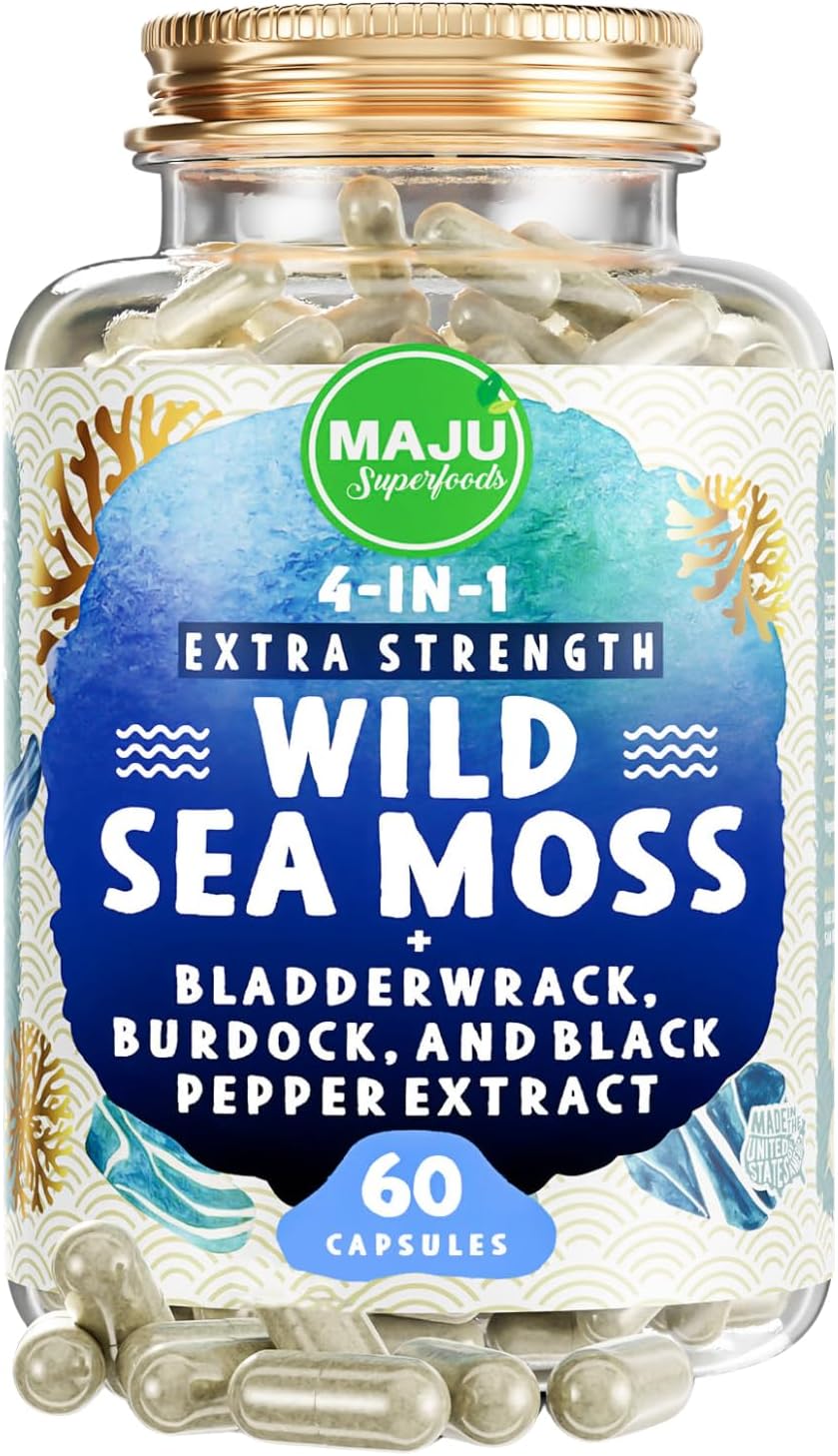
Maju Superfoods Sea Moss Review
Best for Sourcing Authenticity — Caribbean Heritage Sea Moss
Maju Superfoods sources wild-harvested sea moss directly from St. Lucia, honoring Caribbean heritage and traditional harvesting practices. No offshore bulk farming—just authentic, regional sourcing for health-conscious consumers who value origin transparency and ethical supply chains.
Quick Specs
| Source | Wild-harvested, St. Lucia, Caribbean |
| Harvesting Method | Traditional wild-harvesting (not farmed) |
| Certifications | Organic-aligned practices |
| Processing | Minimal processing, whole food |
| Price Point | Budget to Mid-Range |
| Cost Per Serving | ~$0.32 |
| Primary Value | Regional authenticity & heritage sourcing |
| Our Score | 7.5/10 |
Our Testing & Analysis
Maju Superfoods’ strength is sourcing authenticity and ethical supply chain integrity. We evaluated their commitment to traditional Caribbean harvesting, examined why St. Lucia sourcing matters beyond marketing, and assessed whether their lower testing transparency is a significant drawback. We analyzed their product against our 5-factor methodology, recognizing that their value proposition differs fundamentally from laboratory-centric brands.
Regional Authenticity — Genuinely Excellent
St. Lucia is a legitimate and respected sea moss origin with authentic harvesting heritage. Unlike bulk offshore farming in Southeast Asia (where many brands source their “sea moss” for pennies), Maju sources directly from traditional Caribbean harvesters. This support for local economies and traditional harvesting practices matters—it honors methods that date back generations in Caribbean cultures.
The Caribbean has deep cultural connections to sea moss, known locally as “Irish moss” despite its Caribbean origins. Communities in St. Lucia, Jamaica, Trinidad, and surrounding islands have harvested and used sea moss for centuries in traditional medicine and nutrition. Maju’s commitment to this heritage is more than marketing—it’s cultural recognition and economic support for communities dependent on traditional ocean harvesting. This differentiates them from industrial suppliers.
Wild-Harvesting vs. Pool Farming — Why This Matters
This distinction is crucial. Wild harvesting means ocean-grown sea moss in natural marine conditions. Pool farming means seaweed cultivated in artificial holding tanks on land or in controlled offshore facilities. The differences are significant:
Mineral Density: Wild sea moss grows in pristine Caribbean waters with natural mineral concentrations. Pool-farmed seaweed develops in controlled, often artificially-balanced environments. Ocean-grown typically delivers higher mineral density, particularly iodine, because wild conditions are more mineral-rich than managed pools. Environmental Impact: Pool farming can deplete natural populations and degrade coastal ecosystems. Wild harvesting, when done traditionally and sustainably, maintains ecological balance. Hand-harvesting allows populations to regenerate seasonally. Purity Profile: Farmed seaweed may be exposed to farm chemicals, antibiotics used in aquaculture, or artificial nutrients. Wild-harvested seaweed has only natural ocean exposure (though ocean health varies by region). Authenticity: Wild harvesting honors traditional practices and supports indigenous knowledge systems. Pool farming is industrialization.
Maju’s wild-harvesting claim is a significant differentiator. While this can’t be independently verified without site inspection, the claim aligns with their brand positioning and Caribbean sourcing. Many budget-conscious brands cut corners by using pool-farmed seaweed from Asia and marketing it vaguely as “sustainably sourced.” Maju’s explicit St. Lucia claim is more credible.
St. Lucia’s Water Quality & Mineral Content
St. Lucia’s location in the eastern Caribbean (between Martinique and St. Vincent) provides specific oceanographic advantages. The waters are warm (74-84F year-round), mineral-rich from volcanic geology, and less polluted than many Asian farming regions. Sea moss grown in warmer Caribbean waters develops different mineral profiles than cold-water Atlantic varieties (like those harvested in Nova Scotia by Atlantic Naturals). Both are legitimate; they’re just different.
The volcanic geology of Caribbean islands enriches ocean water with trace minerals. This may contribute to higher mineral density in Caribbean sea moss compared to cooler-water varieties. It’s not definitively proven, but it’s plausible—and it’s a value proposition beyond just “it’s from the Caribbean.” Maju’s positioning recognizes actual oceanographic differences.
Purity & Testing — The Weak Point
While Maju meets quality standards, they don’t publish batch-level third-party testing results publicly (unlike premium competitors like Elm & Rye or Atlantic Naturals). Their sourcing transparency is excellent; their testing transparency is minimal. This creates a trust gap for consumers who prioritize laboratory verification over storytelling.
This is the honest tradeoff: Maju invests in ethical sourcing and supply chain integrity. They don’t invest heavily in third-party testing and published lab results. Different brands have different priorities. Atlantic Naturals prioritizes testing transparency. Maju prioritizes sourcing authenticity. Which matters more depends on your values.
What the 7.5/10 Score Means Honestly
The 7.5 score isn’t criticism—it’s context. Maju scores lower than Atlantic Naturals (9.0) or Elm & Rye (9.0) primarily because of testing transparency, not because of product quality concerns. If you weight sourcing authenticity and ethical supply chains heavily, Maju might outrank competitors. If you weight third-party verification heavily, premium brands win. The score reflects our methodology’s emphasis on testing transparency—a choice, not an absolute truth.
Value Analysis — Excellent for Ethical Buyers
At ~$0.32 per serving, Maju Superfoods is budget-friendly—one of the lowest-priced options reviewed. You’re paying for sourcing authenticity, not laboratory verification. For ethically-minded, budget-conscious buyers, this is solid value. Compare to Nutra Remedies ($0.38) or Atlantic Naturals ($0.42). Maju costs $0.06-$0.10 less per serving. That’s meaningful if you take supplements daily ($22-$37/year savings).
Why Sourcing Transparency Matters
The supplement industry often sources raw ingredients through middlemen and bulk consolidators. You don’t know the origin, harvesting method, processing details, or environmental impact. Maju’s commitment to direct St. Lucia sourcing cuts through this opacity. You’re not buying a commodity blend. You’re buying directly from traditional harvesters with traceable supply chains.
For consumers who care about fair trade, sustainability, and cultural heritage, this matters—perhaps more than batch-level testing. Many consumers prioritize: “Where does this come from, who profits, and is the ecosystem being damaged?” For these values-driven buyers, Maju’s model is superior to brands optimizing for laboratory verification while sourcing from industrial bulk suppliers.
This is a legitimate philosophical difference. Science-focused consumers want test results. Values-focused consumers want sourcing integrity. Neither is wrong. Maju serves the values-focused market effectively.
Pool Farming vs. Wild Harvesting: The Full Picture
Pool Farming (dominant industry method): Seaweed is cultivated in artificial tanks or offshore pens. Predictable, scalable, cost-effective. However: potential exposure to farm chemicals, inconsistent mineral content, potential for microbial contamination in crowded conditions, and ecosystem impact from monoculture operations. Wild Harvesting (traditional method): Seaweed is hand-harvested from natural ocean populations. Labor-intensive, less predictable, higher cost. However: naturally high mineral density, zero farm chemical exposure, ecosystem sustainability through regeneration cycles, and cultural authenticity.
The industry shifted to pool farming because it’s profitable and scalable. Wild harvesting is becoming rare as labor costs rise. Maju’s commitment to wild-harvesting from St. Lucia is notable because it’s increasingly difficult to source. This explains their budget pricing despite higher sourcing costs—they’re maintaining margins by avoiding premium testing and marketing infrastructure.
Pros & Cons
Pros
- Direct St. Lucia sourcing — Authentic Caribbean origin with traceable supply chain
- Wild-harvested, not farmed — Sustainable, high-potency, no farm chemical exposure
- Supports traditional Caribbean harvesters — Economic support for communities dependent on ocean harvesting
- Budget-friendly at ~$0.32/serving — One of the lowest prices without sacrificing sourcing integrity
- Minimal processing, whole food approach — No extracts or isolates, just dried seaweed
- Ethical sourcing alignment with values-driven consumers — Supports fair trade and cultural heritage
- Caribbean ocean mineral advantage — Warm-water, volcanic-geology enriched waters provide natural mineral density
Cons
- No published batch-level third-party testing — Unlike premium brands, results aren’t publicly available
- Testing transparency is minimal — Must trust sourcing claims without laboratory verification
- Less brand recognition in U.S. market — Smaller operation means fewer marketing resources
- Smaller operation means less marketing visibility — Harder to find in major retailers compared to established brands
- Sourcing authenticity valued over laboratory verification — Different priority than science-focused brands
- May have occasional availability constraints — Wild harvesting is less predictable than farming; seasonal variations expected
- Claims can’t be independently verified without site inspection — Must trust company statements about sourcing
Who Should Buy This?
Ideal for:
- Ethically-minded consumers who value sourcing authenticity above laboratory verification
- Budget-conscious shoppers seeking quality at the lowest price point
- Those supporting traditional Caribbean harvesters and fair trade principles
- People interested in cultural heritage and traditional harvesting practices
- Seekers of wild-harvested (non-farmed) sea moss with ecosystem sustainability focus
- Consumers wanting direct sourcing transparency (knowing exactly where their supplement originates)
- Those seeking minimal processing and whole food approaches
Not ideal for:
- Those prioritizing laboratory verification and testing transparency above all
- Consumers seeking established brand recognition and wide retail availability
- People wanting visible, published third-party testing results
- Those requiring consistent year-round availability (wild harvesting may have seasonal constraints)
- Consumers comparing purely on laboratory testing (they should choose Elm & Rye or Atlantic Naturals)
Score: 7.5/10
Deducted 2.5 points for: Lack of published third-party testing (major transparency gap compared to Atlantic Naturals), minimal availability in U.S. retail channels, and inability to independently verify sourcing claims. However, if your values prioritize ethical sourcing over laboratory verification, Maju deserves to rank higher in your personal evaluation.
Compare Sourcing-Focused Brands
Compare This Brand
Get Weekly Sea Moss Intel
New reviews, research breakdowns, and supplement tips — delivered every week.
No spam. Unsubscribe anytime.